Note · · 1 min read
The Transcript Worked. The Workflow Did Not.
An early TapScribe test reminded me how much of a product’s value lives in what happens after the AI has finished.
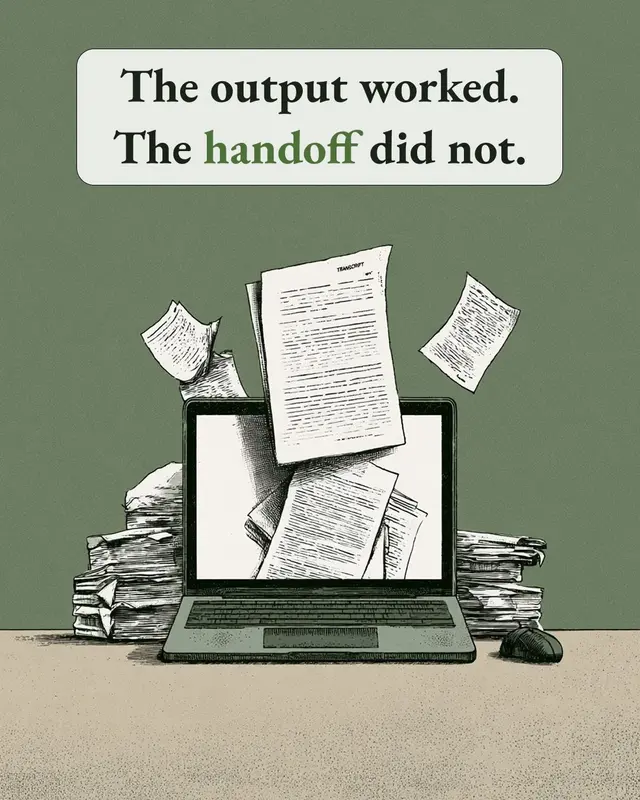
The transcription took three minutes. The real product work started after that.
In one of the first real tests of TapScribe, an 80-minute meeting produced a usable transcript in about two to three minutes. The tester described the quality as decent and moved the result into his knowledge system.
The AI had done its job. But the product had not quite finished its job.
The tester had selected his notes inbox as the destination. Alongside the useful transcript, TapScribe placed the raw audio and intermediate files there too. The transcript also had a generic name.
The output was good. The handoff created clutter and unnecessary sync work.
A compelling output can make a prototype look complete. In real use, value is often won or lost in what happens next. Does the result arrive in the right place? Is it clearly named? Does it remove work, or quietly create more of it?
This is the work I find most valuable. Not simply making the AI perform, but helping the whole product fit the way someone already works.
That early test showed exactly where the product needed judgement next. A usable product must also take responsibility for where the answer lands.